
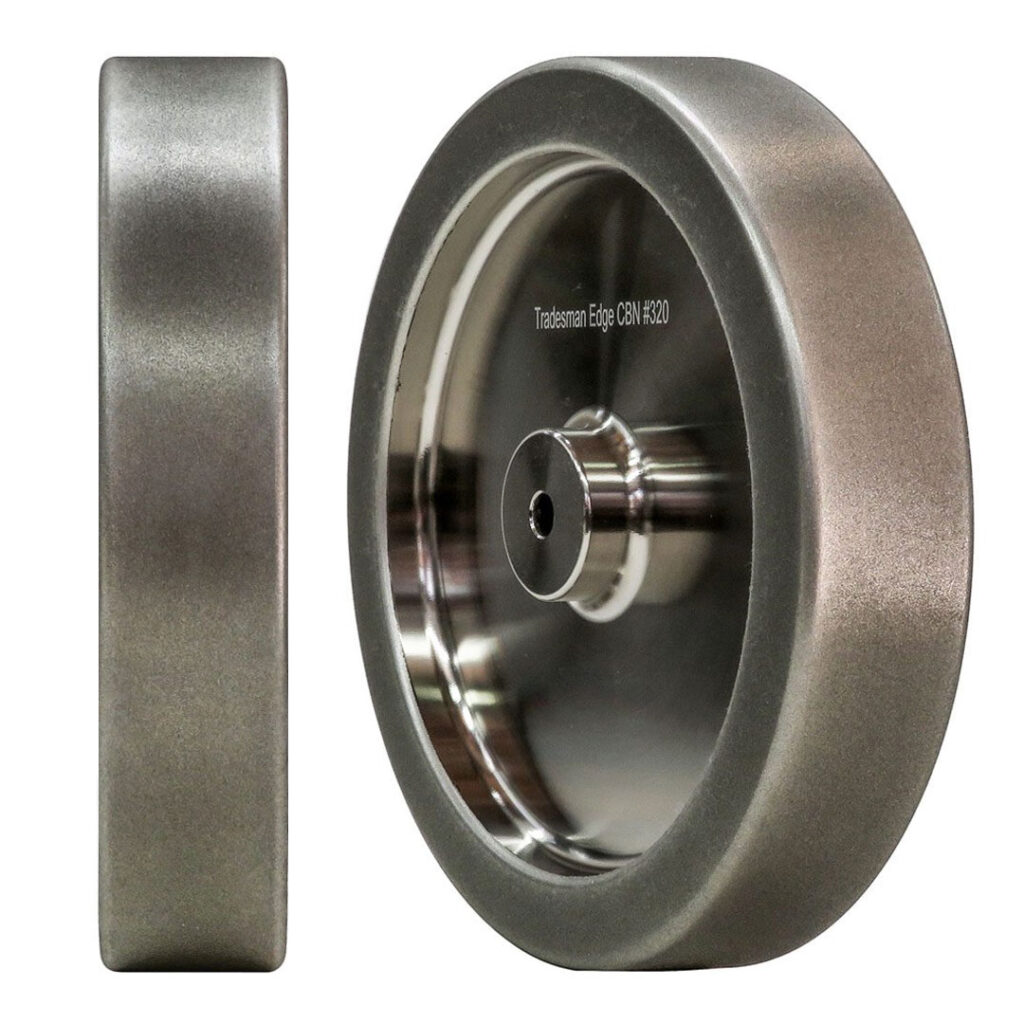
The Evolution of Superabrasives and the Rise of Aluminum-Core Plated Wheels
Superabrasive grinding wheels have fundamentally changed the tool-making and sharpening landscape. For a precision machine tool company like Cuttermasters, staying at the forefront of wheel technology isn’t just about selling a product—it’s about optimizing cycle times, tool geometry, and machine longevity. This brief covers the journey of Diamond and CBN abrasives and explores a significant contemporary shift: the adoption of aluminum wheel bodies for electroplated bond wheels.
- A Brief History of Superabrasives: Turning the Edge
Before the mid-20th century, industrial grinding relied entirely on conventional abrasives like aluminum oxide and silicon carbide. While effective for soft metals, they struggled, wore down rapidly, and lost form when facing the ultra-hard alloys emerging in the aerospace and manufacturing sectors. united grinding The Diamond Milestone (1950s) In 1954, General Electric successfully synthesized the first industrial diamond. This revolutionized the machining of non-ferrous materials. Suddenly, cutting tungsten carbide, advanced ceramics, and industrial glass became highly efficient. However, diamond had a fatal flaw: carbon affinity. At high grinding temperatures, the carbon in diamond chemically reacts with the iron in steel, causing the diamond crystals to dissolve rapidly. Zhengzhou Ruizuan+ 2 The CBN Solution (Late 1960s) To overcome diamond’s limitation with ferrous metals, scientists synthesized Cubic Boron Nitride (CBN) in 1969. Boasting a hardness second only to diamond, CBN possesses incredible thermal stability and does not react with iron. This made CBN the ultimate game-changer for grinding High-Speed Steel (HSS), tool steels, and hardened alloy metals—the backbone of the cutting tool industry. Zhengzhou Ruizuan
- The Mechanics of Electroplated (Plated Bond) Wheels
Superabrasive grains must be held by a matrix, typically resin, vitrified (ceramic), metal-sintered, or electroplated. For applications requiring complex geometries and aggressive cutting, electroplated wheels stand out. Mirka How it works: Rather than embedding abrasive grains throughout a thick matrix, an electroplated wheel features a precision-machined metal core that is submerged in a nickel chemical bath. Through an electrochemical process, a single, densely packed layer of diamond or CBN is anchored onto the core, with the nickel matrix encapsulating about 60-70% of the grit height. Continental Diamond Tool+ 1 Key Advantages of Plated Wheels: • Maximum Grit Protrusion: Because the crystals stand proud of the nickel bond, they cut incredibly freely and aggressively, generating less friction. • No Dressing Required: Plated wheels hold their exact engineered profile for the entirety of their usable life. They never require truing or dressing sticking. ZYsuperhard • Complex Profiles: If you can machine the metal core to a specific shape, you can plate it. This makes them perfect for intricate tool forms, fluting, and specialized router bits. Continental Diamond Tool
- The Modern Shift: Steel vs. Aluminum Wheel Bodies
Historically, the structural core (or blank) of an electroplated wheel was almost exclusively machined from solid steel. Steel provided excellent rigidity and resistance to deflection under heavy load. However, modern tool grinding setups—especially high-precision CNC tool grinders and compact shop units like those engineered by Cuttermasters—have driven a major shift toward aluminum wheel bodies. ZYsuperhard +————————————————————-+ | BENEFITS OF ALUMINUM CORE WHEELS | +——————————+——————————+ | THERMAL CONTROL | SPINDLE HEALTH | | Draws heat rapidly away from | 1/3 the weight of steel, | | the cutting zone, protecting | reducing bearing wear and | | delicate tool tempers. | spin-up strain. | +——————————+——————————+
Why Aluminum is Dominating Contemporary Plated Wheels
- Superior Thermal Conductivity (Heat Management)
In a single-layer plated wheel, heat dissipation is everything. Aluminum conducts heat far faster than steel. It acts as an efficient heat sink, pulling the intense thermal energy away from the grinding zone and into the body of the wheel. This prevents “tool burn” or metallurgical damage to HSS and carbide blanks, while also protecting the nickel plating from thermal degradation. Continental Diamond Tool+ 1
- Drastic Weight Reduction & Spindle Longevity
Aluminum weighs roughly 30% as much as steel. Large or wide steel grinding wheels place immense gyroscopic and static strain on a machine’s spindle bearings. Switching to aluminum: Weiler Abrasives+ 1 • Minimizes spindle wear and extends machine life. Norton Abrasives • Reduces energy consumption during startup and braking cycles. Forture Tools • Lowers the overall weight of the machine package for shipping and user handling. united grinding
- Precision Balancing and High-Speed Safety
Modern grinding relies on higher Surface Feet Per Minute (SFPM) to achieve flawless surface finishes. Aluminum cores can be turned to incredibly tight tolerances and are dynamically balanced with ease. The lower mass means lower kinetic energy at high speeds, reducing the risk of destructive machine damage in the rare event of a catastrophic crash.
- The “Strip and Re-Plate” Economy
One benefit of electroplated superabrasives is that once the single layer of diamond or CBN is worn out, the core doesn’t go into the scrap bin. It can be chemically stripped and re-plated with fresh abrasive for a fraction of the cost of a new wheel. Lightweight aluminum cores reduce round-trip shipping costs for these re-plating programs, making them highly cost-effective for end-users.