
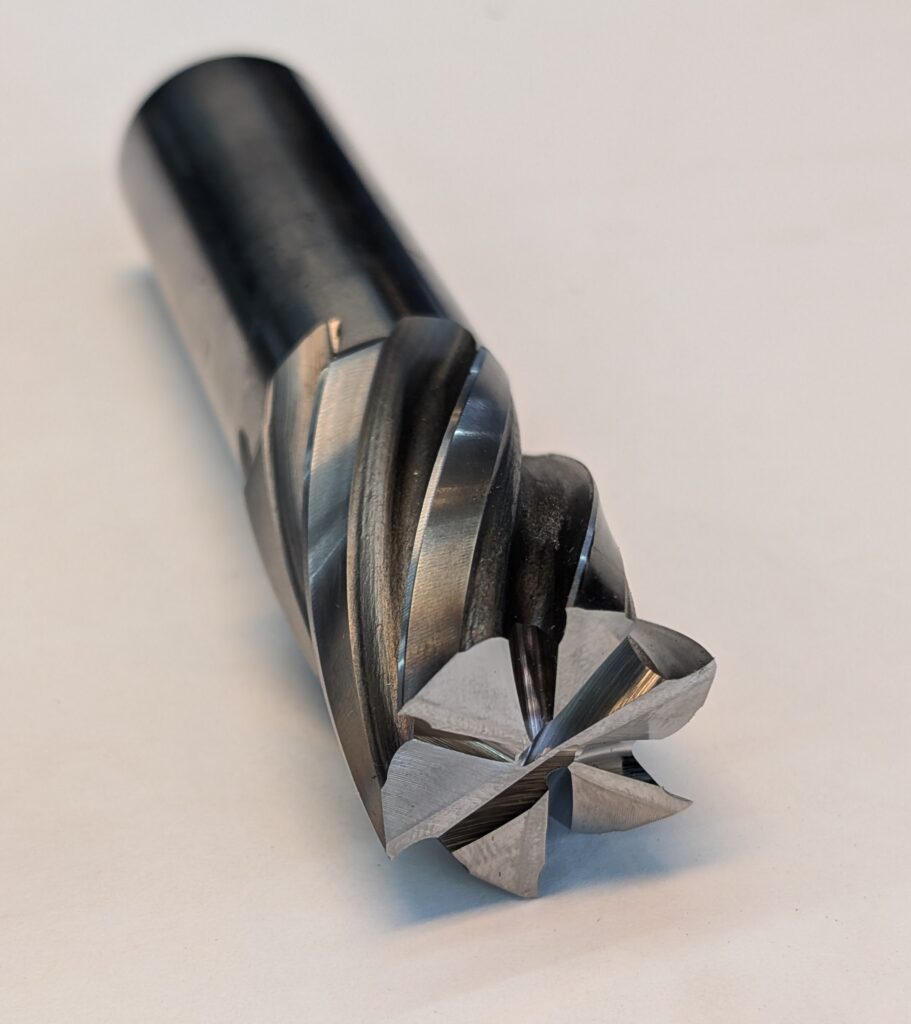
Edge Prep is as important as sharpening
After grinding carbide end mills, the goal of edge preparation is to remove micro-chipping from the grind and produce a controlled micro-edge. A perfectly “razor” edge in carbide actually fails quickly; most shops use a very small hone radius (≈5–20 microns) to strengthen the edge.
Here are the best methods used in industry, from simplest to most controlled.
1. Diamond Lapping Film (Excellent for small shops)
Very effective for manual finishing.
How:
Use diamond lapping film (3 µm – 9 µm).
Lay it on a flat plate (granite or glass).
Hold the cutting edge parallel to the film.
Lightly stroke the flute once or twice only.
Benefits
Removes grinding burrs
Produces very clean edge
Low cost
Common sequence
9 µm → 3 µm
This gives a ~5–10 µm hone radius.
2. Diamond Paste + Cast Iron or Copper Plate (Mirror edge)
Used in many tool rooms.
How
Apply 1–3 µm diamond paste
Use cast iron or copper lap
Lightly drag the cutting edge along the plate
Benefits
Extremely smooth edge
Mirror finish
Very controlled honing
3. Ceramic Fiber Brush (Fast production method)
Many production shops use ceramic fiber brushes.
Example
Xebec ceramic brushes
Benefits
Consistent hone
Good for complex flute shapes
Removes micro burrs quickly
Typical hone radius:
10–20 µm
4. Micro Sandblasting (Industrial coating prep)
Common for high-end carbide tools before coating.
Process
120–240 grit aluminum oxide
Very light pressure
Result
Uniform edge rounding
Improves coating adhesion
But it requires careful control.
5. Nylon Diamond Filament Brush (Good for small grinders)
Mounted in a spindle.
Example
600–1200 grit diamond brush
Benefits:
Fast
Easy
Consistent hone
What Most Tool Manufacturers Actually Do
For carbide end mills before coating:
Grind
Edge hone (10–15 µm radius)
Polish flute
Coat
The hone dramatically improves:
tool life
edge strength
coating adhesion
Important Detail Many Miss
Grinding wheels leave micro-fractures in carbide.
A light hone:
removes fractured grains
stabilizes the cutting edge
Without honing, carbide edges chip quickly.
Typical Hone Size by Application
| Application | Edge Hone |
|---|---|
| Aluminum cutting | 3–5 µm |
| General steel | 8–12 µm |
| Hard steel | 15–20 µm |
Interesting Idea (For Your Grinder Designs)
Since you design tool grinders, a very effective system is:
Slow rotating diamond felt wheel with diamond slurry
300–600 RPM
1–3 µm diamond
touch edge for 1–2 seconds
This produces near-perfect edge prep.
✅ In your opinion as someone grinding carbide:
The single biggest improvement in tool life often comes from edge prep, not the grind itself.
If you’d like, I can also show you:
The exact edge prep used by Sandvik and Kennametal
How to measure hone radius under a microscope
A very simple edge-prep attachment you could add to your grinder machines (could be a great product feature for trade schools).
Large manufacturers like Sandvik Coromant and Kennametal do not leave carbide tools “razor sharp” after grinding. They use a controlled micro-geometry edge preparation before coating. The exact process is proprietary, but the geometry and ranges are well known in the cutting-tool industry.
Below is essentially what they do.
1. The Standard Edge Geometry They Use
Most premium carbide tools use one of three shapes:
1. Radius Hone (most common)
A true circular radius blending rake face and flank.
Typical hone:
5–20 µm radius
Symmetrical
This is the most widely used edge prep for carbide tools.
Used for:
end mills
drills
inserts
general cutting tools
2. Waterfall Hone
The hone is biased toward the rake face.
Typical ratio:
~2:1 toward the rake face
Purpose:
keeps more carbide under the cutting edge
increases strength for heavy cuts.
Used for:
harder materials
coated tools
interrupted cuts
3. Chamfer + Hone (K-land or T-land)
A small ground chamfer plus hone.
Example:
chamfer: 0.02–0.08 mm
hone radius: 5–20 µm
This is very common in indexable inserts.
Sandvik refers to variants like:
S-land (chamfer + hone)
T-land (chamfer)
These strengthen the edge and improve resistance to chipping.
2. Typical Hone Sizes Used by Big Tool Companies
| Application | Hone radius |
|---|---|
| Aluminum | 3–6 µm |
| General steel | 8–12 µm |
| Hard steel | 12–20 µm |
| Heavy roughing | 20–30 µm |
Most coated carbide end mills are around:
8–15 µm hone radius
3. The Actual Process Used (Factory Methods)
Sandvik / Kennametal commonly use combinations of:
1. Abrasive filament brushing
CNC controlled brushes with abrasive nylon filaments.
Benefits:
very precise
repeatable micro-geometry
±0.0003″ accuracy possible.
2. Drag / vibratory honing
Tools placed in abrasive media and rotated.
Good for:
round tools
consistent edge radius.
3. Micro blasting
Fine Al₂O₃ blasting used to:
clean grinding damage
prepare for coating.
4. Important Detail: Variable Edge Prep
Modern premium tools often use variable hone size along the edge.
Example:
larger hone near tool corner
smaller hone along cutting edge
This matches chip thickness so the tool cuts efficiently.
5. What This Means When Sharpening End Mills
When you regrind carbide end mills, the best approximation of a factory edge is:
8–12 µm radius hone
You want:
remove micro-chipping from grinding
maintain sharpness
create a strong micro-edge
6. Simple Toolroom Method That Mimics Sandvik/Kennametal
The closest manual method:
Grind edge normally
Use 1–3 µm diamond paste
Light drag along a cast iron lap or diamond film
1–2 strokes only
That produces roughly a 5–10 µm hone.
💡 Since you design tool grinders, here’s something interesting:
Some modern carbide tool grinders now include automatic edge-prep stations using diamond nylon brushes. It’s becoming a standard feature.
If you’d like, I can also show you something extremely interesting:
The exact edge-prep geometry used on high-performance aluminum end mills (Fraisa, OSG, Sandvik).
It’s actually sharper than most people think and one reason aluminum tools cut so well